Учим английский язык с интересными фактами со всего света. Итак, чтение 7 класс английский-11. Гигантские круги на полях. Кто их рисует? А также смотрите — Английские артикли-1. Английские артикли-2. Артикли-3. Английские артикли-4. Артикли-5.
Содержание записи:
Чтение 7 класс английский-11. Гигантские круги

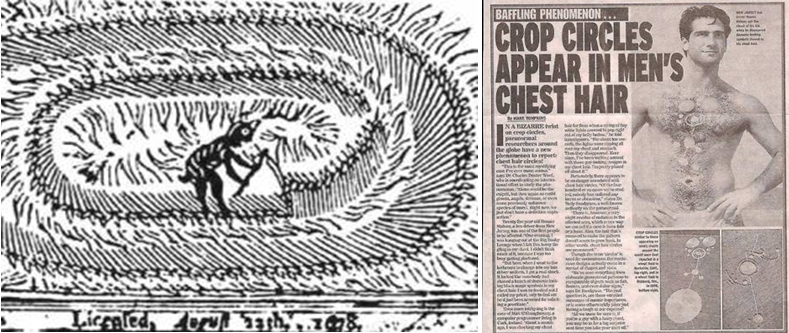
The earliest documented mention of figures in the margins is an English pamphlet from 1678 entitled «The Devil Mower,
or Strange News from Hertfordshire.» It tells the story of a farmer who haggled with a poor mower over mowing three and a half acres of oats. The fee demanded by the mower seemed too high to the owner. And he exclaimed in his heart:
«It’s better to let the devil mow than such a worker!»
That very night, something diabolical really happened to the field. The oats in the field turned out to be mown in a very strange way. It resembled some kind of huge drawing,
and the «drawn» lines were extremely smooth, the beveled spikelets lay neatly, all clockwise. The way the oats were mowed looked like a kind of perfection
that a mere mortal is not capable of. Moreover, the grains themselves were not affected by mowing and were suitable for sale as a ready-made, full-fledged crop.
The locals were frightened to leave their homes, realizing that this was the work of the devil.
And the owner himself didn’t dare hire any of them to harvest, for the same reason.
An important caveat to this document: Researcher Jim Schnabel notes
that this brochure [ˈbrəʊʃ(ʊ)ə] cannot be considered a historical precedent for modern crop circles [sɜːkl]. In it, the stems are cut off, not bent, as in modern circles.
Nevertheless, this phenomenon is still referred to as the «first circle» that appeared in the world.
In 1880, Nature magazine published a letter from amateur scientist John Rand Kapron, who described perfect circles of crushed wheat in Surrey.
Чтение 7 класс английский-11. Гигантские круги
He suggested that they were created by a «cyclonic [saɪˈklɔnɪk] wind.» This is the first mention of circles in the scientific press. The modern phenomenon began in the late 1970s in England, especially in Wiltshire [ˈwɪlʧɪə],
near Stonehenge and Avebury, places that already attracted fans of mysticism [ˈmɪstɪsɪzm].


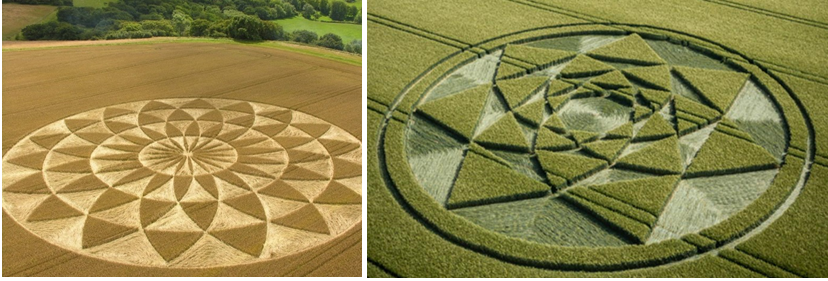
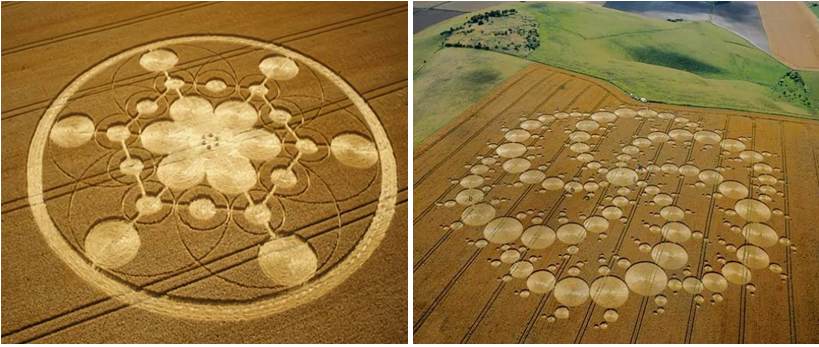
By 1990, about 500 figures had been recorded in the UK alone, and by 2008, there were more than 9,000 reports worldwide. The patterns became more complex,
from simple circles to spirals [ˈspaɪərəl], fractals, mathematical symbols, and even stylized DNA images. The largest reached 300-450 meters in diameter.
Everything opened in September 1991. Two Britons— Douglas Bauer and David Chorley,
said they had created more than 250 crop circles since 1978. Their toolkit was ridiculously simple. A wooden board about 1.2 meters long with a rope around the edges for bending the stems… A baseball cap with a wire ring for precise aiming and a compass… One man held the center, the other walked around the circle,
pressing the stems with a board.
To prove their words, they made a circle right in front of the journalists
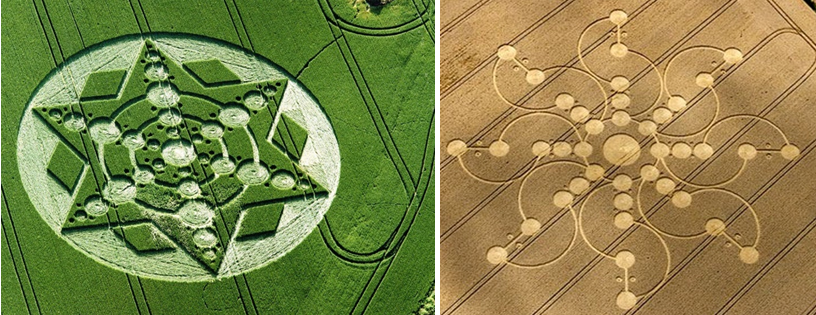
— in 40 minutes. Ufologist expert Pat Delgado, who had previously called their circles «authentic,» [ɔːˈθentɪk] was forced to admit forgery. Strangely enough, the recognition did not kill the phenomenon, but turned it into art. Entire «circle» groups have emerged. Such as the art collective Circlemakers led by John Lundberg,
who have shown that it is possible to create figures of any complexity, including those
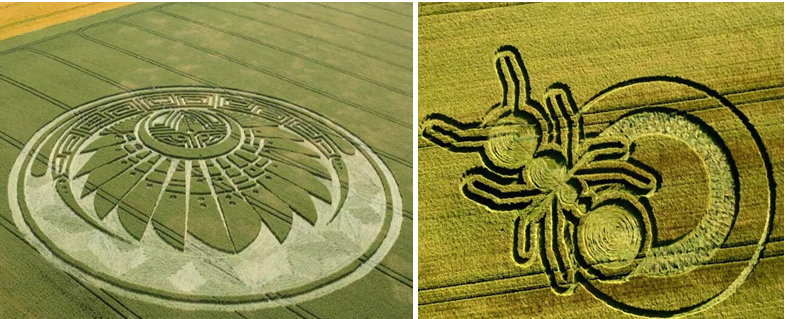
that were previously considered «messages from outer space.» There is even a circle with the Firefox browser logo made by American students.
Вопросы
Answer the following questions:
1. What is the earliest documented mention of crop-like figures? And what was it called?
2. Summarize the story told in the 1678 pamphlet in 2–3 sentences.
3. According to researcher Jim Schnabel, why can’t that 1678 brochure be considered a true precedent for modern crop circles?
4. What did John Rand Kapron suggest as the cause of the circles he described in 1880? And where did they appear?
5. When and where did the modern crop circle phenomenon begin? And why were those places especially notable?
6. How did the complexity of the patterns change over time? And what are some examples of later designs mentioned in the text?
7. What were the approximate numbers of recorded figures in the UK by 1990 and worldwide by 2008?
8. Who were Douglas Bauer and David Chorley? And what did they claim about their involvement in creating crop circles?
9. Describe the simple tools they used to make the circles? And explain how the technique worked.
10. How did Bauer and Chorley prove their claims? And what was the reaction of ufologist Pat Delgado?
11. In what way did the admission of human creation change the nature of the phenomenon? And give one example of a modern “artistic” circle mentioned in the text.
12. List three theories about the origin of crop circles mentioned in the text? And note which ones lack scientific evidence.
13. Explain two scientific points the text gives to debunk the “supernatural” explanations (about stems and radiation).
14. What economic impact do crop circles have on farmers? And how does this contrast with the situation in Wiltshire?
15. How has the public perception of crop circles changed by 2026, according to the text? And why does the myth still persist?
Заключение
Итак, дорогие ученики! Мы с вами учим английский язык с фактами со всего света. И сегодня узнали про гигантские круги. Если материал был полезен, подписывайтесь, чтобы не пропустить новый. Задавайте вопросы, если они у вас появились. А также смотрите английские идиомы про знание. Что повлияло на развитие английского языка? Интересные факты про английский. Восьмое чудо света. История восьмого чуда света. Гриб, который съедает сам себя. Мой пукающий кот. А ты бы надел такое платье? Продавец арбузов-1. Продавец арбузов-2. Прозрачная лягушка. Необычные факты про музыку.
Фразовые глаголы про путешествия. А также синонимы слова beautiful. Фразовые глаголы про путешествия. А также смотрите Фразовые глаголы про путешествия. Фразовые глаголы про Хэллоуин. Идиомы про моду. Наречия в английском языке. Словообразования в английском — существительные. Английские идиомы про еду. Заменители модальных глаголов. Идиомы с животными. Синонимы слова big. Предлог for в английском. Фразовые глаголы про спорт. Синонимы слова cry. Перфектные времена. Английские артикли-1. Английские артикли-2. Артикли-3. Английские артикли-4. Артикли-5.
Дополнительный материал
А также смотрите дополнительный материал: подготовка к ОГЭ — монологическое высказывание — Досуг подростков. Телевидение в нашей жизни. Место, где я живу. Поддерживать себя здоровым. Чтение книг. Про интернет. Хобби в нашей жизни. Про каникулы. Средства массовой информации. Про школу. Проблемы экологии. Про молодежь. Интернет в нашей жизни. Олимпийские игры. Наука в нашей жизни. Иностранные языки в нашей жизни. Загрязнение окружающей среды. Иностранные языки в нашей жизни. Про путешествия. Выбираем профессию. Здоровый образ жизни в еде. Про образование. Защита окружающей среды. Спорт в России. Друзья в нашей жизни. Интернет для подростков.
И до встречи на следующем занятии! See you soon!