Мы продолжаем рубрику — Чтение 8 класс английский-16. Учим язык с интересными фактами со всего света. Итак, почему тайцы ставят тарелки на пол?
Содержание записи:
Чтение 8 класс английский-16. Почему тайцы ставят тарелки на пол-1
Maybe, it is unusual and strange of me to put the palms together… As if I am going to pray, and slightly to nod my head to you. But I am going to speak to you about customs and traditions of Thailand [ˈtaɪlænd]. And in such a way I am greeting you as if Thailand’s inhabitants courtly do. I am suggesting the acquaintance with the country not only because of being inquisitive and industrious.

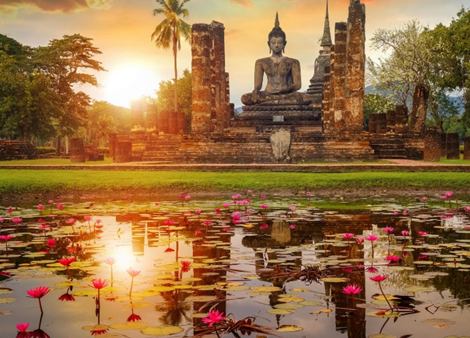
The country kindles anybody’s interest. The Thais are welcoming you … but be thoughtful while responding back. Your palms in front of you, held together as if a boat, mustn’t have too low level. The more your respect to the person the higher your polite “boat”.
Grand and the most respectful personalities are greeted in position higher than the chest. The curious fact that the Thais divide the human body onto parts. According to the importance that is cleanness. The head is considered to be the main and the cleanest part. It isn’t allowed to touch on the head of any Thai. That is regarded as a great disrespect.
The Thais believe one fact. A guardian spirit inside the head that guards the person during the whole life. For the same reason one cannot step on the Thai coin with the printed on it King’s head. The upper part of the body is so paid attention to. On Wednesday the Thais don’t go to the hairdresser’s.
This day of the week is considered to be full of romping evil spirits that can threaten the sacred, simply sacrosanct head.
Чтение 8 класс английский-16. Почему тайцы ставят тарелки на пол-2
The hands have less status in comparison with the head. Because they carry out work and can become dirty. The muddiest and the lowest part are legs and feet. In front of Thai lodgment, especially the church and even some shops… You can see a pile of omnifarious pairs of shoes. Indoors the Thais must be bare-footed.
It is worth mentioning about customs combined with the birth and death of a person. When the child appears into the world all relatives gather together. And they begin taking up lacks of the baby-born. In such a way the very spirit that settled down in the sacred head of the baby with his birth gets to know that he must guard not an ideal creature and prop him in the course of live. While the ceremony of burying nobody is crying and moaning. Because the Thais believe the dead to move into another state where there’s no suffering. But on the contrary, comfortable surroundings and feeling bliss.
The Thais see the dead off for some days and only in 3, 5 or 7 days. These even figures are thought to be happy. In addition to it, it isn’t allowed to bury on Sundays and Mondays — days-off, and on Thursday when the Teachers’ day is marked (why not to join the Thais and congratulate Natalya Stanislavovna on her professional holiday every Thursday?)
To the local spirits Thailand’s inhabitants, in general, pay much attention. In front of the entrance of each lodgment and before the door of cafés one can espy some plates with food on it right away on the ground. These really appetizing and various dishes are meant to be served for the spirits, not for cats and dogs.
Вопросы
- How does the narrator greet the reader, and what Thai custom does this imitate?
- What is the correct way to return a traditional Thai greeting? And how does the height of the palms reflect the level of respect?
- According to Thai beliefs, why is the head considered the most important and cleanest part of the body?
- What are two examples from the text that show how highly the Thais regard the head?
- Why do the Thais avoid going to the hairdresser’s on Wednesdays?
- How do status and cleanliness relate to different parts of the body in Thai culture (e.g., head, hands, legs/feet)?
- Why do Thais take off their shoes before entering buildings, and where can you commonly see piles of shoes?
- What custom is followed when a child is born? And what is its spiritual purpose?
- How do Thai funeral customs reflect their beliefs about death? And on which days is burial not allowed?
- Why do Thai people leave plates of food near the entrances of homes and cafés, and who is this food intended for?
Заключение
Дорогие ученики! Мы с вами прочитали очередной текст и узнали про занимательные традиции в Тайланде. Насколько интересен и полезен был для вас материал? Если информация была для вас занимательной, подписывайтесь на нас. Оставляйте свои комментарии и пожелания, если они у вас также возникли. Предыдущий материал — чтение, юные изобретатели, Блез Паскаль. Подземный храм. Юные изобретатели — кто придумал шрифт для слепых. Чтение — юные изобретатели: кто придумал батут? Кто придумал снегоход? Такое необычное существо — пиявка! Дерево, украшенное ботинками. Муравьи зомби. Идиомы про учебу. Жутко ужасные — необычная семья. Самый маленький человек на свете.
Также смотрите — фразовые глаголы про учебу. Фразовые глаголы про отношения между людьми. Синонимы слова lazy. Английские фразы про Helloween. Фразовые глаголы про хобби. Характеристики человека-1. Синонимы слова look. Глаголы животные в английском. Идиомы с одеждой. Чтение в 8 классе — гора крестов. Как развлекаются японцы. Синонимы слова end. Фразовые глаголы про спорт. Птица, которая копирует все. Характеристики человека-2.
А также смотрите дополнительный материал: подготовка к ОГЭ — монологическое высказывание — Досуг подростков. Телевидение в нашей жизни. Место, где я живу. Поддерживать себя здоровым. Чтение книг. Про интернет. Хобби в нашей жизни. Про каникулы. Средства массовой информации. Про школу. Проблемы экологии. Про молодежь. Интернет в нашей жизни. Олимпийские игры. Наука в нашей жизни. Иностранные языки в нашей жизни. Загрязнение окружающей среды. Иностранные языки в нашей жизни. Про путешествия. Выбираем профессию. Здоровый образ жизни в еде. Про образование. Защита окружающей среды. Спорт в России. Друзья в нашей жизни. Интернет для подростков.
И до встречи на следующем занятии! See you soon!