Мы продолжаем рубрику — Артикли в английском-3. Без артиклей разговаривать нельзя, учимся употреблять артикли бегло, не зазубривая. А также смотрите — артикли-1.
Содержание записи:
Артикли в английском-3

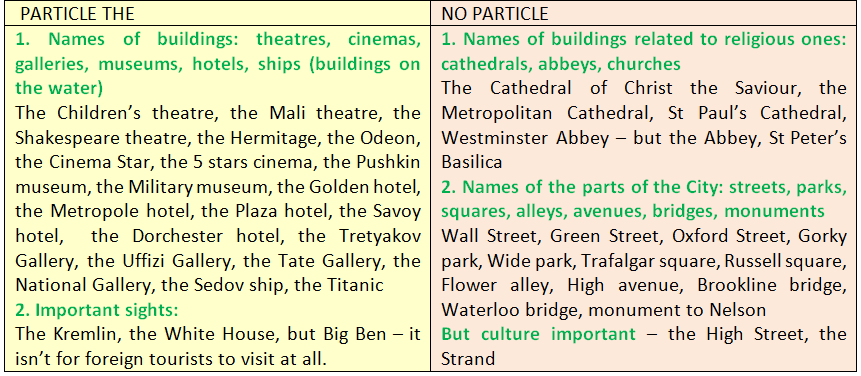
X. Read the text: The Lost Tourist. Fill in the blanks with the ntcessary articles. Pay attention to the names of streets, parks, squares, bridges, buildings, and landmarks. Ask 10 questions.
Упражнение на тему — Артикли в английском-3-I
Alex had always dreamed of visiting ___ Britain. He bought a guidebook, packed his suitcase, and flew to ___ London. The problem was, Alex hadn’t studied English at all. He knew only a few words. And that’s why he spent most of his time lost.
On his first day, he had a wish to see ___ Big Ben and take a photo with ___ Tower of London. Instead, he found himself walking down ___ Oxford Street for hours, getting more and more confused. He asked a passer‑by for directions. The man pointed to ___ High Street and said, “Go straight. Then turn left at ___ Trafalgar Square, and you’ll see ___ National Gallery.” Alex nodded as if he understood, but he didn’t.
Next, he decided to watch a play. He looked for ___ Shakespeare Theatre but accidentally walked into ___ Children’s Theatre, which turned out to be a kindergarten. A kind teacher smiled and gently explained, “This is not a theatre, it’s a nursery.” Alex blushed, thanked her and left.
After that, he tried to find ___ British Museum. He passed ___ Waterloo Bridge and walked through ___ Hyde Park, enjoying the greenery even though he was completely lost. Finally, he spotted a building that looked like a museum. It was ___ Tate Gallery — not the one he wanted. But he went inside anyway and spent a happy hour looking at the paintings.
Feeling a bit braver, he decided to stay at a fancy hotel. He walked past ___ Buckingham Palace and thought it would be a good place to ask for help. But the guards just smiled and pointed him toward ___ Strand. Alex followed the directions and found ___ Savoy Hotel, where he finally got a number.
Упражнение на тему — Артикли в английском-3-II
The next morning, he wanted to visit a religious landmark. He remembered seeing something about ___ St Paul’s Cathedral in his guidebook. And he took a bus and got off near ___ Westminster Abbey. He wasn’t sure if it was the right place, but the beautiful architecture made him stop and stare.
By the end of the week, Alex had seen so many places that he started to feel like a real explorer. He still got lost sometimes, but now he noticed how awkward it felt to just nod and pretend he understood. One evening, sitting in a small café, he overheard two tourists chatting happily about ___ London sights. They laughed, shared tips, and even argued playfully about which museum was the best. Alex realised he wanted to be part of conversations like that.
That night, he wrote in his travel journal: “I’m tired of pretending. Knowing and understanding English sounds truly proud. I want to respect myself enough to learn it properly. On my next trip, I won’t just follow arrows — I’ll stop people and chat about the places we love. I’ll tell them about ___ Red Square, ___ Kremlin, ___ Bolshoi Theatre, ___ Tretyakov Gallery, and ___ Christ the Saviour Cathedral back home. I want them to hear about these places from me, not from a guidebook.”
From that moment, Alex decided to start learning English the very next day. He downloaded an app, bought a beginner’s textbook, and promised himself he’d never hide his lack of knowledge again. He wanted to speak, listen, and understand. Because real travel, he thought, wasn’t just about seeing places — it was about sharing stories.
And although he still didn’t speak much English, he had discovered ___ London in his own way — and now he was ready to discover the world with words
Ответы
Britain, London, Big Ben, the Tower of London, Oxford Street, the High Street, Trafalgar Square, the National Gallery, the Shakespeare Theatre, the Children’s Theatre, the British Museum, Waterloo Bridge, Hyde Park, the Tate Gallery, Buckingham Palace, the Strand, the Savoy Hotel, St Paul’s Cathedral, Westminster Abbey, London sights, Red Square, the Kremlin, the Bolshoi Theatre, the Tretyakov Gallery, Christ the Saviour Cathedral, London
Заключение
Дорогие ученики! Мы с вами продолжили повторение темы про артикли в восьмом классе. Обязательно следите за продолжением. Мы расскажем все про артикли в доступной форме. Насколько интересен и полезен был для вас материал? Если информация была для вас занимательной, подписывайтесь на нас. Оставляйте свои комментарии и пожелания, если они у вас также возникли. Предыдущий материал — чтение, юные изобретатели, Блез Паскаль. Подземный храм.Как развлекаются японцы? Почему тайцы ставят тарелки на пол. Юные изобретатели — кто придумал шрифт для слепых. Чтение — юные изобретатели: кто придумал батут? Кто придумал снегоход? Такое необычное существо — пиявка! Дерево, украшенное ботинками. Муравьи зомби. Идиомы про учебу. Жутко ужасные — необычная семья. Самый маленький человек на свете. Загадочный круг из камней. Учимся разговаривать про окружающую среду. Ужасающий цветок.Бессмертное существо.
Также смотрите — фразовые глаголы про учебу. Фразовые глаголы про путешествия. Синонимы слова different. Синонимы say tell. Фразовые глаголы про отношения между людьми. Фразовые глаголы про технологии. Синонимы слова lazy. Английские фразы про Helloween. Фразовые глаголы про хобби. Характеристики человека-1. Синонимы слова look. Глаголы животные в английском. Идиомы с одеждой. Чтение в 8 классе — гора крестов. Как развлекаются японцы. Синонимы слова end. Фразовые глаголы про спорт. Птица, которая копирует все. Характеристики человека-2. Характеристика человека-3. Артикли-1.
А также смотрите дополнительный материал: подготовка к ОГЭ — монологическое высказывание — Досуг подростков. Телевидение в нашей жизни. Место, где я живу. Поддерживать себя здоровым. Чтение книг. Про интернет. Хобби в нашей жизни. Про каникулы. Средства массовой информации. Про школу. Проблемы экологии. Про молодежь. Интернет в нашей жизни. Олимпийские игры. Наука в нашей жизни. Иностранные языки в нашей жизни. Загрязнение окружающей среды. Иностранные языки в нашей жизни. Про путешествия. Выбираем профессию. Здоровый образ жизни в еде. Про образование. Защита окружающей среды. Спорт в России. Друзья в нашей жизни. Интернет для подростков.
И до встречи на следующем занятии! See you soon!
